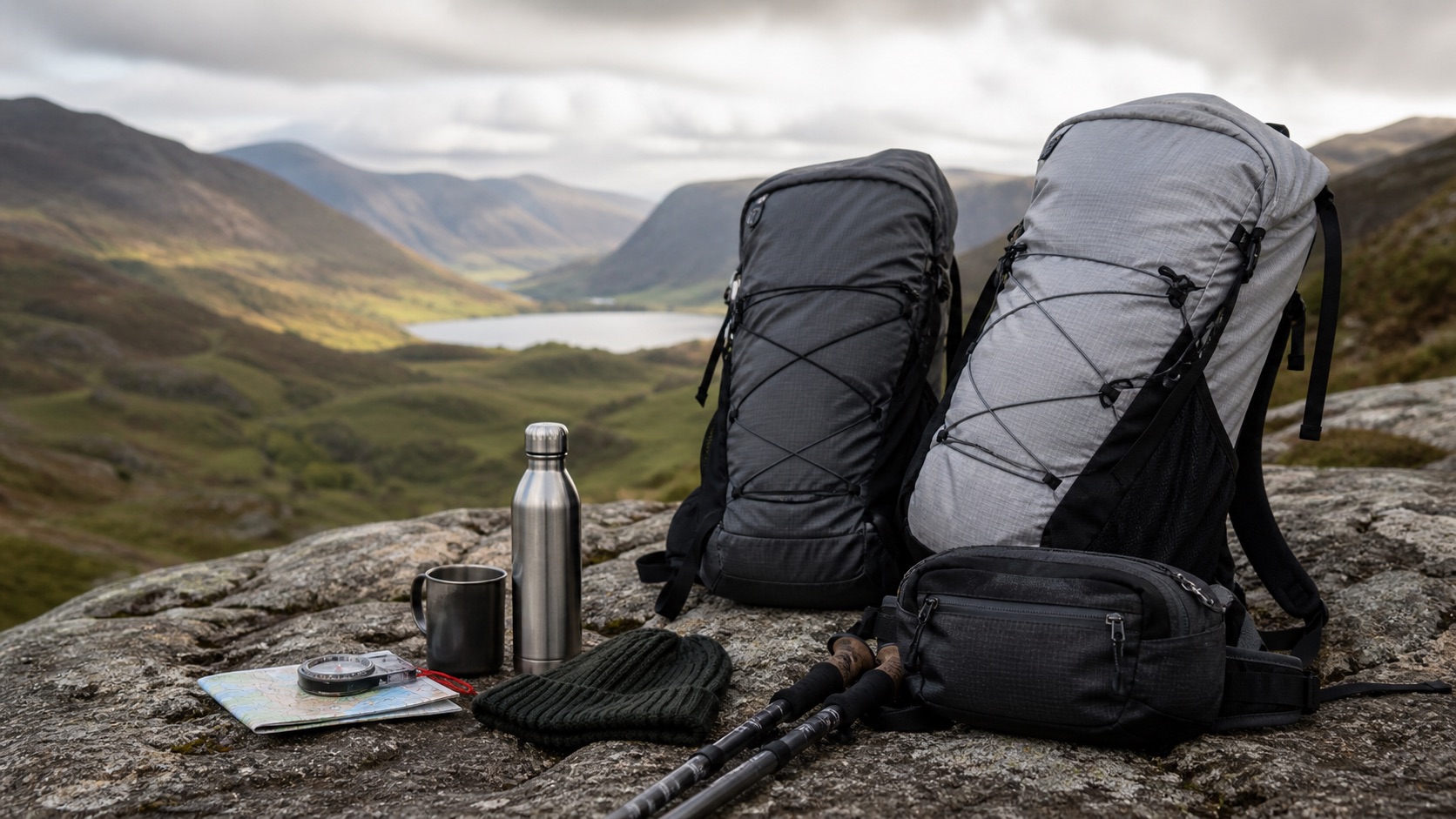
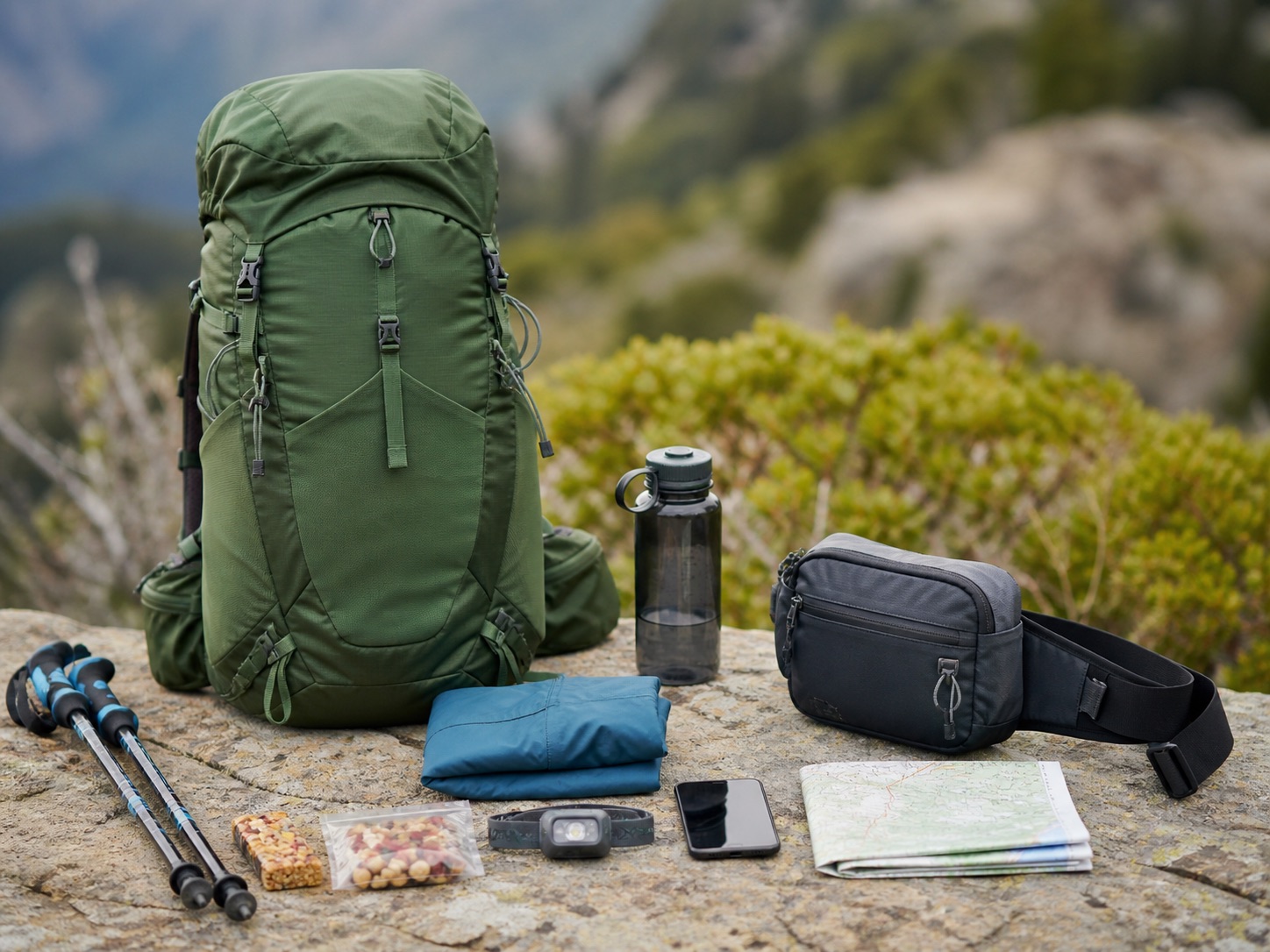
Start with how you carry kit, then choose the right pack style.
For most walks and outdoor days, the decision is simple: use a backpack when the load gets bigger, or a waist pack when quick access matters more than capacity.
Larger loads
Backpacks
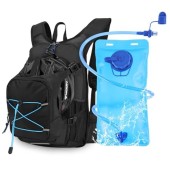
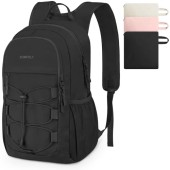
Choose a backpack when you need room for layers, waterproofs, food, water, camera kit, or anything that would feel awkward around your waist. This is the safer starting point for day hikes, longer routes, and changeable weather.
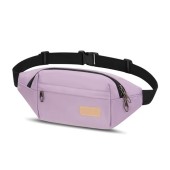
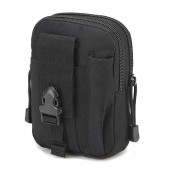
Choose a waist pack when you only need phone, keys, wallet, snacks, dog treats, a compact bottle, or small trail essentials. It keeps common items close without the bulk of a full rucksack.
Use the route, load, and access needs to narrow the category.
How much kit are you carrying?
If you need spare clothing, lunch, waterproofs, or more than one bottle, start with a backpack. If everything fits in your pockets but feels messy, a waist pack may be enough.
How often do you need access?
Maps, phone, treats, snacks, and small cameras are easier to reach from a waist pack. Bulkier items are easier to manage in a backpack with separate compartments.
How long is the route?
Short local walks and travel days suit small carry options. Longer hill walks usually need more space, better load support, and weather-ready storage.
What will the weather do?
For wet UK routes, check fabric, zips, rain covers, and whether important items can stay dry. Weather protection matters more as you carry extra layers or electronics.
Avoid overbuying
The best outdoor bag is not always the largest one.
A large hiking bag can be useful, but it can also encourage you to carry things you do not need. A small waist pack can feel freeing, but it becomes frustrating if you have to leave behind water, layers, or weather protection.
Use this category as a starting point. Compare the carry style first, then move into the more specific collection that matches the way you actually walk, travel, or spend time outdoors.
Quick comparison
Backpack or waist pack?
Carry style
Best for
Check before buying
Backpack
Day hikes, longer walks, spare layers, food, water, and changing conditions.
Capacity, back comfort, shoulder straps, ventilation, pockets, and weather protection.
Waist pack
Short walks, dog walking, travel, festivals, running, and quick-access essentials.
Belt fit, pocket layout, bounce control, bottle storage, and water resistance.
Final check
Keep this page broad and let the specific categories do the deeper work.
For larger hiking bags and walking rucksacks, compare the Backpacks collection. For compact carry, dog walks, bottle-holder styles, and small essentials, compare the Waist Packs collection.
Your privacy settings
We use cookies and similar storage to keep the store secure, remember choices, measure traffic, and manage marketing features. You can accept all, reject all non-essential categories, or customise your preferences.
Privacy settings
Necessary storage is always active. Preferences, analytics, and marketing are optional and remain off until you choose otherwise.
Necessary
Required for secure checkout, session handling, fraud prevention, and core storefront functions.
Preferences
Used to remember choices such as language, currency, and display preferences after you request them.
Analytics
Used to understand visits, site usage, and performance without enabling marketing profiles.
Marketing
Used for affiliate attribution, campaign tracking, advertising tags, remarketing, and similar marketing tools.